Loading...
Serving Hanford, CA and surrounding areas. (559) 794-9939
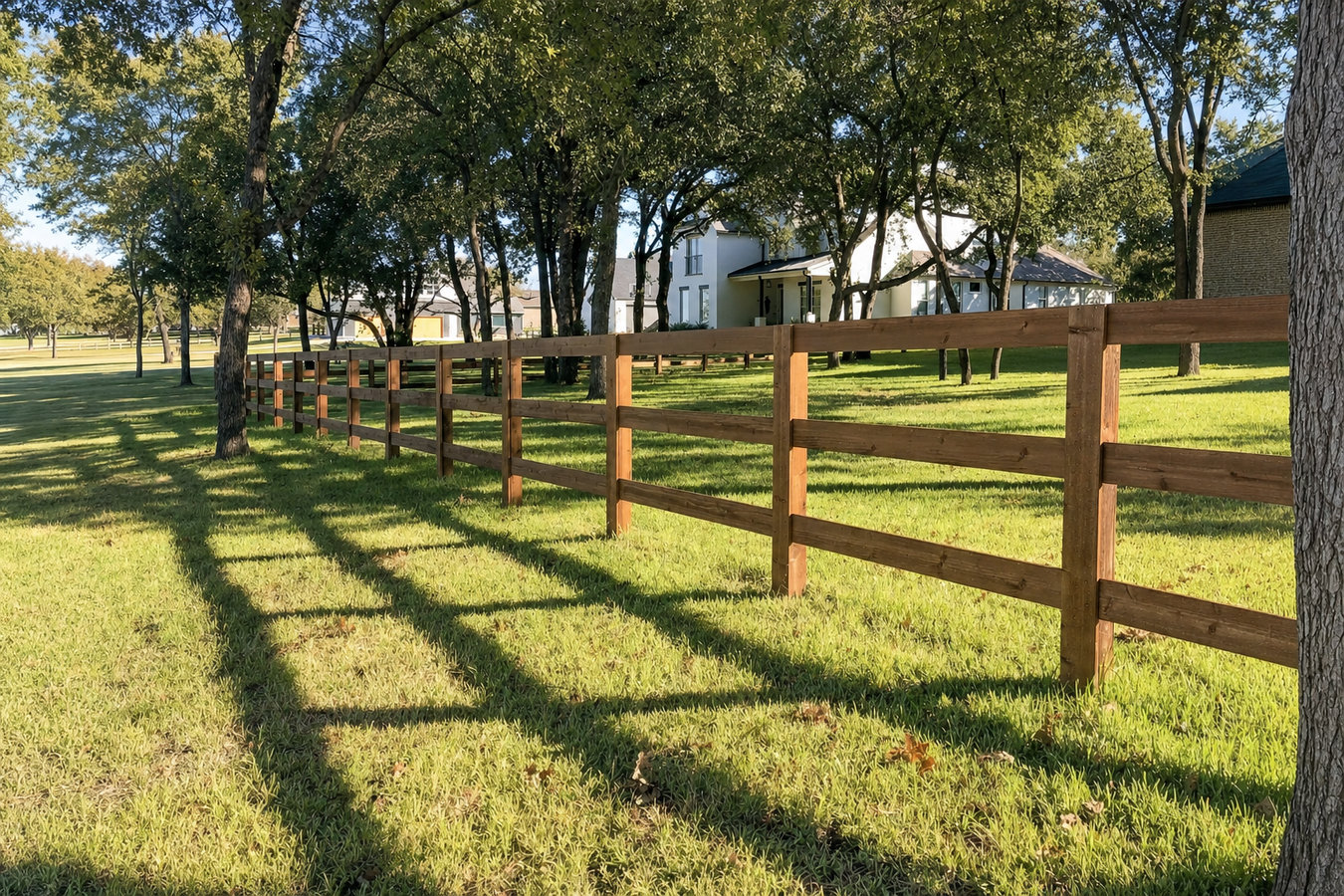
Livestock fencing in Kings County demands more than a standard installation. We build for the clay soil, the heat, and the irrigation easements that catch most contractors off guard.
Farm and ranch fencing in Hanford covers perimeter fencing to keep livestock in, cross-fencing to divide pastures and working areas, corral panels, and agricultural gates. Projects range from single-day barbed wire runs on flat land to multi-day woven wire or pipe steel installations. Most properties in Kings County can be assessed and quoted during a single site visit.
Kings County is one of California's most productive agricultural counties, and local fence contractors work with these conditions regularly - clay soils, irrigation canals, and hot summers that accelerate material wear. Choosing the right fence type for your animals and terrain matters more than it might in a less demanding environment. Many agricultural properties also benefit from a combination of perimeter and interior chain link fence installation around equipment or storage areas, and we can plan both in the same visit.
If you walk your fence line and find posts tilting, pulling away from the wire, or rocking when you push them, the fence is losing its structural integrity. In Hanford's clay soil, this often happens when posts were not set deep enough or when years of wet-dry cycles have worked them loose. A leaning post does not fix itself - it puts stress on the surrounding sections and eventually brings down the wire.
If you are finding livestock in the wrong pasture, or if neighboring animals are getting onto your property, your fence has a gap, a sagging section, or a gate that is not latching. This is the clearest sign the fence is no longer doing its job, and it is a safety issue as well as a property management problem. Do not wait for an animal to reach a road before addressing it.
Wire that was once taut but now sags between posts has lost its tension and is no longer an effective barrier. In the Central Valley's heat, wire expands and contracts significantly with the seasons, and over time this loosens connections at posts. Slack wire is also a hazard - animals can get tangled in it and it is harder to see and avoid with equipment.
Even a well-built fence has a lifespan. A fence that has been in the ground for two decades in Kings County's climate has been through a lot of heat, cold, and soil movement. If you do not know when it was last replaced, a professional walk of the fence line can tell you what is still sound and what needs attention before it fails.
We install woven wire, barbed wire, high-tensile smooth wire, and pipe or tube steel fencing for Kings County agricultural properties. Every project starts with a site visit to walk the property, assess the terrain, check for irrigation easements, and recommend the right fence type for your animals and budget. Before a single post goes in, we confirm property lines and ask about any buried utilities or irrigation infrastructure - then call 811 as a matter of course. For properties that also need secure storage or equipment areas, we can incorporate chain link fence installation into the same project scope.
For smaller animals, dogs, or properties where containment has to be more precise, our pet and dog fencing service handles the closer-spaced, lower-height fencing those situations require. We can plan both in the same visit if your property has mixed-use areas.
Best for cattle and horses - strong enough to resist pushing and set with braced corners that hold tension over long runs across flat Kings County land.
Suited for large-acreage cattle operations where cost-per-linear-foot matters most and the terrain is relatively flat and accessible.
Right for corrals, working pens, and high-contact areas where livestock pressure is constant and a long service life justifies the higher upfront cost.
For properties where gate function and durability are as important as the fence itself - properly hung, level gates that latch securely even under daily livestock pressure.
Kings County is one of California's most productive agricultural counties, with dairy operations, row crops, and livestock ranches throughout the land surrounding Hanford. Local contractors work with these conditions regularly, which means genuine expertise in the specific challenges - clay soil that heaves posts in wet winters, extreme summer heat that degrades untreated wood faster than in cooler climates, and the irrigation canals and water delivery infrastructure that run through and around much of the rural land here. Fencing near those features requires coordination with local water districts to avoid blocking access or violating easements, and skipping that step can mean moving a fence you just paid for.
Scheduling matters too. The Central Valley's tule fog - the thick ground-level fog that settles in from November through February - can delay outdoor work for days at a time. Late spring through early fall is the most reliable window for uninterrupted installation in this area. We serve agricultural properties throughout Kings County, including in Corcoran and Lemoore, where the same soil and climate conditions apply.
The UC Cooperative Extension publishes research-backed guidance on livestock fencing and soil management for Central Valley conditions. For questions about Kings County permit requirements or easements near roads and canals, the Kings County Planning Department is the right starting point.
We ask a few basic questions - roughly how much fencing you need, what animals you are working with, and whether you have a sense of the fence type. Most contractors in the Hanford area want to visit the property before quoting, because terrain, soil, and access all affect cost. We respond to all requests within one business day.
We walk your property with you, check ground conditions including any slopes, irrigation ditches, or existing fence, and measure the fence line. We ask about easements and flag any buried utilities before recommending materials. You receive a written estimate that specifies post type, wire type, spacing, and gate hardware.
Before the crew arrives, you move animals out of the work area. We call 811 to have underground utilities marked at no cost - this protects your irrigation lines and buried electrical from accidental damage during post setting. A good contractor does this as a matter of course, not only when asked.
The crew sets corner and end posts first - the most critical structural elements - then line posts, wire, and finally gates. Once the work is done, we walk the fence line with you: checking gate function, wire tension, and post stability. Wait the recommended 24 to 48 hours after concrete is poured before returning animals to the area.
We visit your land, walk the fence line with you, and deliver a written quote that specifies every material and step - no vague estimates, no surprises when the crew arrives.
(559) 794-9939Kings County's clay-heavy soils swell in wet winters and shrink in dry summers, gradually working shallow posts out of position. We set posts deeper than the minimum and use the right backfill techniques for this ground - the detail that determines whether your fence stays straight for two decades or starts leaning within a few seasons.
Irrigation districts in the Hanford area hold easements on many rural properties, and fencing across one without checking can mean moving it at your own expense. We review potential easement areas with you during the site visit and can help you identify what to confirm with your water district before work begins - protecting you from a costly mistake most contractors skip.
The right fence for cattle is not right for horses, and neither works well for goats. We ask about your specific livestock before recommending materials, spacing, and height - so the fence contains what you need it to contain from day one rather than requiring additions or modifications after the fact.
Every estimate we provide specifies the post type, wire type, post spacing, and gate hardware, so you know exactly what you are getting and can compare it against any other quote. If something unexpected comes up during installation, we contact you before proceeding. You never receive a bill that is larger than the estimate without prior approval.
Agricultural fencing in Kings County has specific demands that a contractor without local experience will underestimate - and that gap shows up within the first wet-dry cycle. Every project we take on is built around the actual conditions on your property, from soil depth to animal type to irrigation infrastructure.
Close-spaced, lower-height fencing for dogs and smaller animals on Hanford properties where livestock fencing is too open or too tall.
Learn MoreHeavy-gauge chain link for equipment yards, storage areas, and mixed-use agricultural properties where a secure perimeter is needed alongside open pasture fencing.
Learn MoreCall or request online today and we will schedule a site visit, walk your property, and deliver a written quote before the busy installation season peaks.